

Research & Policy
Creative solutions, transformative Impact:
Research that inspires change
SPS serious games and wargames are widely utilised to effectively support the important processes of policy development and policy formation. This application occurs within various government departments, academic organisations, or for national and regional decision-makers, who rely on these tools to simulate complex scenarios and analyse potential outcomes.
-
Serious games provide a conceptual framework for developing policy and assisting in uncovering second or third order consequences that might not be immediately apparent.
-
Using game structures in a safe to fail environment, setting allows for creative exploration and assessment of policy options. oes here
-
Serious games allow people to examine policies from various perspectives, which is crucial in a divided world
-
Serious games provide a consistent framework for in-depth policy discussions – bringing together expertise and generating opportunities for emerging valuable observations, insights and lessons in the policy arena.
-
SPS serious games have a track record of valuable contribution to academic study, especially in the social science, political science and conflict studies disciplines.n
-
Serious games and wargames create immersive environments that engage stakeholders where a study might be seeking to study behaviours, decision making or attitudes.
-
Whilst serious games and wargames often focus on soft factors and qualitative metrics, there is a long track record of consistent and creative methods of data capture that inform and support credible evidential outputs.
-
The important 'safe to fail' feature and quick development time of serious games enable extensive experimentation in study formats and structures across many academic fields.
-
Whist serious game are indicative rather than predictive, their open-ended nature means that they are an effective tool for gathering observations, insights and lessons from engaged subject matter experts.
The Stone Paper Scissors team specializes in developing bespoke serious games and intricate wargames that are tailored to meet the specific policy or research needs of its diverse range of clients. This includes educational institutions, such as universities and high schools, as well as charitable organizations and various national government departments.

Additional Benefits
Facilitated planning using game techniques allows organisations to consider the 'other side of the hill' of competitors, risks and 'what if' scenarios.
Testing the team's soft skills in the challenging and psychologically safe environment of a game.

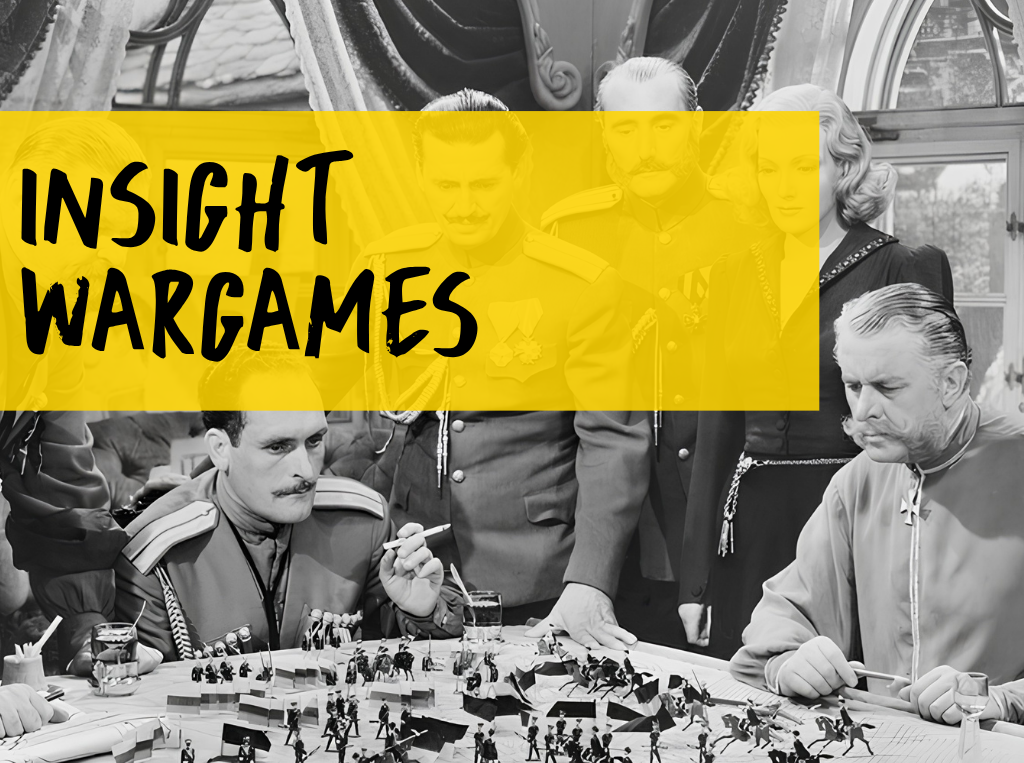
INSIGHT WARGAMES
Stone Paper Scissors has several decades of experience in designing and delivering analytical wargames for a variety of clients within government, business and academe. Find out more here
For further information please contact Stone Paper Scissors on admin@stonepaperscissors.co.uk or contact us using the form below.
For further information please fill in the form below or alternatively contact us by email.
“What are the key elements that differentiate serious games from traditional policy analysis tools, and how do they enhance understanding of complex systems and their cascading consequences?”
“ What unique insights or lessons have been observed through the use of serious games that might not emerge in traditional policy discussions?
”
“Stakeholder Engagement: In what ways do serious games facilitate collaboration among stakeholders with diverse expertise and perspectives?”
“Experimentation: How does the “safe to fail” feature and rapid development of serious games encourage experimentation in academic study formats, and what advantages do they offer compared to traditional research methods?”